

Introduction
Choosing between a 2 Stroke Outboard Motor and a 4 Stroke Outboard Motor is a common challenge for boat owners, fishing operators, and commercial marine users. Both engine types offer unique advantages depending on the intended boating application, operational requirements, and performance expectations.
Understanding the differences between these marine engines can help you select the right Suzuki Marine Outboard for your vessel.
What Is A 2 Stroke Outboard Motor?
A 2 Stroke Marine Engine completes its power cycle in two piston movements, making it lighter, simpler, and highly responsive.
Advantages Of 2 Stroke Boat Engines
- Lightweight construction
- Faster acceleration
- Compact engine design
- Easy portability
- Suitable for small boats and fishing applications
These Portable Outboard Motors are commonly used for lightweight marine operations and smaller vessels requiring quick throttle response.
What Is A 4 Stroke Outboard Motor?
A 4 Stroke Marine Engine operates through a four-stage combustion cycle, delivering smoother and more fuel-efficient marine performance.
Advantages Of 4 Stroke Boat Engines
- Better fuel economy
- Quiet marine operation
- Reduced emissions
- Lower maintenance requirements
- Ideal for long-duration marine use
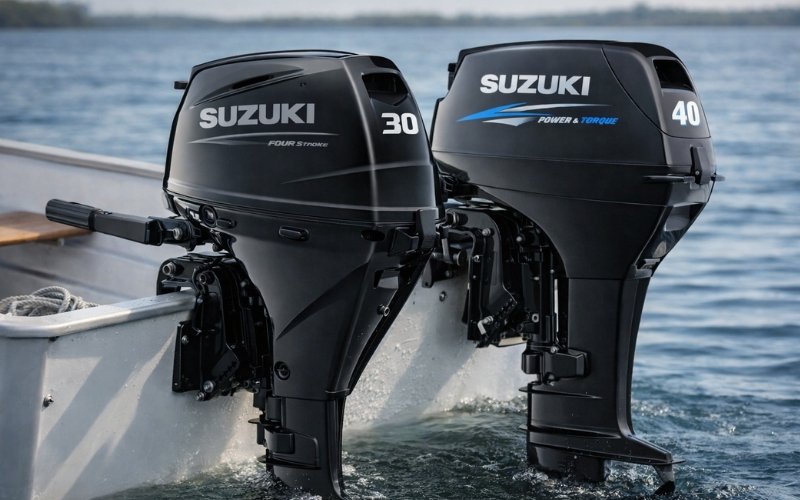
Suzuki 4 Stroke Outboard Motors are widely preferred for commercial vessels, recreational boating, and high-performance marine applications.
Which Outboard Motor Is Best For Fishing Boats?
For lightweight fishing boats requiring mobility and portability, Suzuki 2 Stroke Boat Motors are highly effective. However, for long fishing trips and fuel-efficient operation, Suzuki 4 Stroke Marine Engines provide superior operational efficiency and smoother marine performance.
Choosing The Right Marine Engine
The right marine engine depends on:
- Boat size
- Usage frequency
- Fuel efficiency requirements
- Portability needs
- Commercial or recreational use
Suzuki offers reliable marine outboard solutions in both categories, helping customers choose the ideal engine for their marine applications.
Conclusion
Both 2 Stroke and 4 Stroke Outboard Motors offer unique performance advantages. While 2 Stroke Marine Engines excel in lightweight portability and quick power delivery, 4 Stroke Boat Engines provide fuel efficiency, quieter operation, and long-term reliability.
Selecting the best option depends on your boating goals and operational requirements.